
Introduction
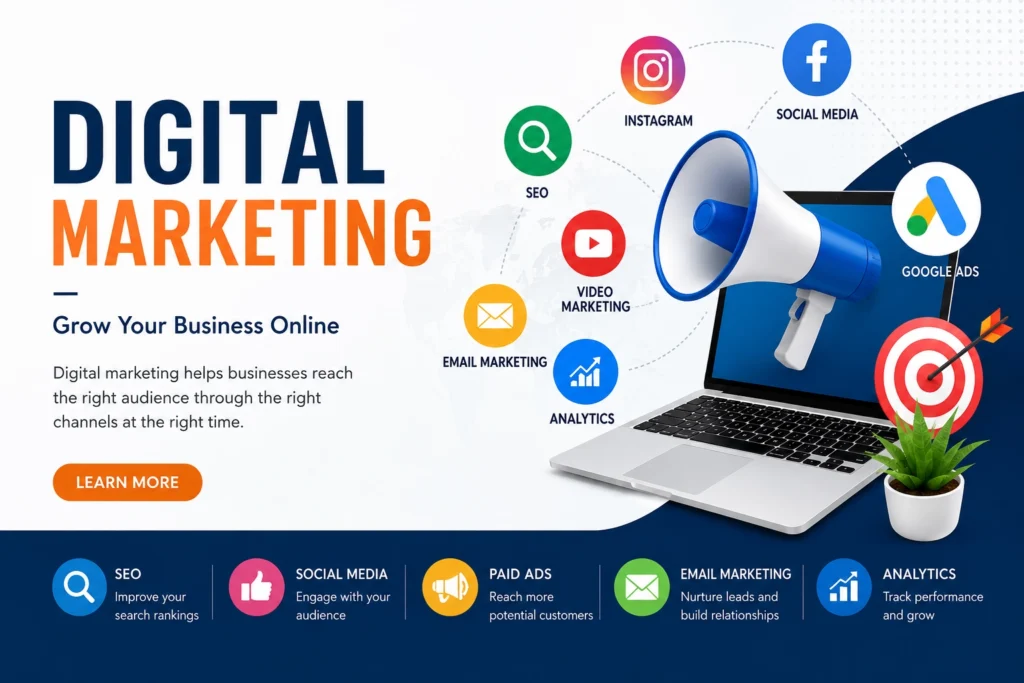
Digital marketing is changing faster than ever. New technologies, social media platforms, and changing customer expectations are constantly shaping the way businesses connect with people. In 2026, businesses need to understand these changes if they want to reach the right audience, build a strong brand, and increase sales.
Artificial intelligence, quality content, SEO, social media, data-driven marketing, and personalization are some of the key areas businesses should pay attention to this year. When used properly, these strategies can help businesses build a stronger online presence and achieve long-term growth.
1. Artificial Intelligence in Marketing
Artificial Intelligence (AI) is becoming a useful part of everyday digital marketing. It can help businesses save time, handle repetitive tasks, understand customer behavior, and create more personalized experiences. AI can also process large amounts of customer data, giving marketers useful insights that can help them make better decisions.
There are many ways businesses can use AI in marketing. It can help with content ideas and creation, answer common customer questions through chatbots, recommend products, and improve customer support. For example, an online store can suggest products based on what a customer has searched for or purchased before. This can make the shopping experience easier and potentially lead to more sales.
That said, AI should not replace the human side of marketing. Creativity, original ideas, emotional understanding, and good decision-making are still important when creating campaigns that customers can trust and relate to.
2. Quality Content Builds Trust
Creating useful content is still one of the best ways for a business to connect with its audience in 2026. People are more likely to trust a business when it gives them helpful information instead of constantly trying to sell something.
Businesses can share blog posts, videos, articles, social media content, guides, and infographics depending on what their audience prefers. For example, a fitness business could create videos about simple exercises, healthy habits, or how customers can get better results from its products.
Good content does more than attract visitors. It can help a business show its knowledge, build credibility, and develop stronger relationships with customers. Instead of creating content just to stay active online, businesses should focus on producing content that is original, useful, relevant, and genuinely helpful to their audience.
3. SEO Remains Essential
Search Engine Optimization (SEO) continues to play an important role in digital marketing. When people search online for a product, service, or answer to a question, good SEO can help a business appear in those search results and get noticed by potential customers.
Businesses should use relevant keywords naturally throughout their website content, headings, and blog posts. But SEO is not only about keywords. Website speed, mobile-friendliness, simple navigation, and helpful information all contribute to a better experience for visitors.
A website that is properly optimized can bring in organic traffic without relying entirely on paid advertising. Since search engines and user behavior continue to change, businesses should regularly review and update their content and SEO strategies to maintain their visibility.
4. Growth of Social Media Marketing
Social media has become a natural part of how businesses communicate with their customers. Platforms such as Instagram, Facebook, YouTube, and LinkedIn give businesses opportunities to promote their products, share information, show their brand personality, and stay connected with their audience.
Short-form videos, educational posts, customer reviews, live videos, and interactive content can all help businesses get more attention. However, posting frequently does not automatically mean better results. What matters more is whether the content is useful, interesting, and relevant to the people you want to reach.
One of the biggest advantages of social media is the ability to communicate directly with customers. Replying to comments, answering messages, and listening to feedback can make customers feel heard and help businesses build stronger relationships and loyalty.
5. Data-Driven Marketing
Good marketing decisions should be based on more than guesswork. Data-driven marketing allows businesses to look at real information and understand what is actually working.
Businesses can track things such as website visits, engagement, conversion rates, and social media performance. These numbers can reveal what customers are interested in and which marketing activities are giving the best results.
For example, if a business notices that its audience engages more with videos than text-based posts, it can create more video content. Small insights like this can help businesses improve their campaigns, use their marketing budget more wisely, and focus on strategies that are more likely to deliver results.
6. Personalization in Digital Marketing
Customers don’t want to see the same generic message everywhere. They are more likely to respond when the content, products, or offers they see are relevant to their interests. This is why personalization is becoming increasingly important in digital marketing.
Businesses can use customer information to create more relevant messages, product recommendations, emails, and special offers. For example, an online shopping website might recommend products based on what a customer has purchased or viewed in the past.
When done properly, personalized marketing can make customers feel understood and valued. It can also improve engagement and encourage customers to return. At the same time, businesses need to be responsible with customer information and make sure they respect privacy and handle data carefully.
Frequently Asked Questions (FAQs)
1. What digital marketing trends should I focus on in 2026?
Start with the strategies that make the most sense for your business. AI, useful content, SEO, social media, data-driven marketing, and personalization are all important areas to consider, but your priorities should depend on your audience and goals.
2. Do I really need AI for my digital marketing?
Not necessarily, but AI can make many marketing tasks easier and faster. It can help with content ideas, customer support, data analysis, and personalization. The key is to use AI as a tool while keeping human creativity and judgment involved.
3. Is SEO still important in 2026?
Yes. People still use search engines every day to find businesses, products, services, and information. A good SEO strategy can help your website appear in relevant searches and attract organic visitors over time.
4. What type of content should my business create?
Think about the questions your customers ask and the problems they need help solving. Depending on your business, you could create blog posts, videos, guides, how-to content, customer stories, or useful social media posts.
5. Which social media platform is best for my business?
There isn’t one platform that works best for every business. It depends on where your target customers spend their time. Rather than trying to be everywhere, focus on the platforms where you can connect with the right audience.
6. Can small businesses benefit from AI marketing tools?
Yes. Small businesses can use AI to generate content ideas, answer common customer questions, analyze marketing data, and automate repetitive tasks. This can be particularly helpful when a business has a small team or limited time.
7. How can I personalize my digital marketing?
Start by understanding your customers and how they interact with your business. You can then use that information to send more relevant emails, recommend suitable products, and provide content that matches their interests.
8. Why is data important in digital marketing?
Data gives you a clearer picture of what is working and what isn’t. For example, it can show whether customers prefer videos, blog posts, or a particular type of campaign. These insights can help you make smarter marketing decisions.
9. How can my business keep up with new marketing trends?
You don’t need to follow every new trend. Instead, pay attention to changes in customer behavior, search engines, social media, and marketing technology. Try strategies that are relevant to your business, measure the results, and continue with what works.
10. What should I do first to improve my digital marketing?
Start with the basics. Know who your target customers are, make sure your website is easy to use, create useful content, and work on your SEO. Once these foundations are in place, you can gradually add AI, social media, data analysis, and personalization to your strategy.
Conclusion
Digital marketing will continue to change as technology and customer expectations evolve. In 2026, businesses have more tools and opportunities than ever to reach the right people and build meaningful relationships with them. AI, quality content, SEO, social media, data, and personalization can all play an important role in that process.
However, successful digital marketing is not simply about using the latest tools or following every new trend. It’s about understanding your customers, giving them something useful, and creating experiences they can trust.
Businesses that combine technology with human creativity and a clear understanding of their audience can build a stronger online presence and stay competitive. In the long run, the businesses that focus on providing real value and building genuine customer relationships are more likely to achieve lasting success.